
Georgia Corrections Release Path
A felony sentence from Lumpkin County may move a person from the county jail into GDC custody. That county departure is a transfer, not a state discharge. The GDC record then becomes the main source for state facility, charges, sentence data, and release date. A facility location indicates continuing state custody even though the local roster no longer shows the person.
State custody may end at maximum release, parole release, or another lawful discharge point. Parole continues under community supervision and should be checked through the State Board of Pardons and Paroles and the Georgia Department of Community Supervision. A completed sentence differs from parole because parole remains part of the sentence under supervision. The county jail record and state offender record therefore document different stages.
Confirm a GDC Release
Open the GDC Offender Query. Search by first and last name, then refine common results with a GDC ID, case number, race, sex, age range, or county of conviction when the form offers those fields. Match the person with known court and sentence facts rather than relying on a name alone.
- Search the name and review possible state-offender matches.
- Compare identity, offense, sentence, and conviction-county details.
- Read facility location and release-date fields together.
- Check the Parole Board database if the result points to parole.
- Contact GDC records when the public result needs documentary support.
A person never sentenced into state custody may not appear. The Lumpkin County release search remains the correct route for a local pretrial or short-sentence jail release.
Georgia Corrections Search Fields
GDC says its Find an Offender service can locate charges, facility location, and release date. Photographs display automatically when available. The query reaches state offenders and sentence histories; it does not replace the county inmate check for a pretrial detainee.
| Field | How to read it |
|---|---|
| Facility location | A current location points to continuing GDC custody |
| Release date | The state-custody release or discharge date shown by GDC |
| Sentence and offense | Facts used to match the correct person and case |
| GDC ID or case number | Stronger identifiers for refining a common name |
| Photo | An identity aid when GDC makes one available |
A GDC release date is not the same as a Tentative Parole Month. A TPM marks a future Board review point and is not a final promise. Confirm actual release through the state offender record and, for parole, the Board’s parolee tools.
Lumpkin Release Record Fields
A release record does more than show that a name vanished from the roster. It ties the end of a booking to a reason and, where applicable, a destination. That distinction prevents a move to another custodial system from being mistaken for freedom from custody.
| Field | What it establishes |
|---|---|
| Booking and release time | The start and end of the local custody event |
| Release reason | Bond, court action, time served, sentence completion, or transfer |
| Bond information | Whether bond was the release route and what type applied |
| Holding agency | Which agency had an interest in the custody event |
| Receiving agency | Whether custody continued with GDC, USMS, ICE, or another jail |
Charge data is not the same as a conviction. The court file remains the better source for disposition. Likewise, a jail release date does not by itself show whether parole, felony probation, municipal probation, or another obligation followed.
Georgia Release Date Layers
Georgia rules define Maximum Release Date as the date a person would leave GDC after serving the entire sentence, apart from parole decisions. Life and death sentences have no maximum release date under that definition. The Parole Board’s TPM is different: it is the month for final review and, if appropriate, setting a parole release date. Conduct and required programs can affect it.
Eligible people may earn Performance Incentive Credits. GDC says up to twelve points can reduce a TPM or Maximum Release Date by one to twelve months through case-plan, education, vocational, or work-detail progress. These are not county jail credits. Serious violent felony mandatory portions under O.C.G.A. 17-10-6.1 may not be reduced through ordinary parole or earned-time measures. Georgia therefore has no single release percentage that fits every sentence.
GDC Parole and Supervision
Parole release does not end every part of a state sentence. The Georgia State Board of Pardons and Paroles makes parole decisions, while the Department of Community Supervision handles field supervision for parolees and felony probationers. The Dahlonega DCS office serves Lumpkin County and the Enotah Circuit.
When GDC shows a release date, check whether the person entered parole. The Parole Board’s parolee database and DCS office can confirm the next stage. A parole record differs from a prison discharge because conditions and supervision remain. A later discharge from supervision is a separate milestone. These sources should not be replaced with the county jail roster, which only covers the earlier local custody event.
Lumpkin Court Release Proof
Court records often supply the reason behind a local release. Superior Court holds felony criminal files. Magistrate Court handles warrant applications, certain misdemeanors, and good-behavior bonds. Dahlonega Municipal Court covers city misdemeanor, traffic, and ordinance matters. A bond order, dismissal, sentence, or other disposition may remain accessible after the live custody entry disappears.
Match the court to the charge and arresting agency rather than assuming every matter belongs in one clerk’s office. A court order can authorize release, while the jail record shows when the order was carried out. Both records may be needed when dates differ because processing took time or another hold remained. Municipal probation is also distinct from felony supervision through the Georgia Department of Community Supervision.
Georgia Discharge Search Limits
Use GDC for a state sentence, not for a person whose case never entered state custody. Keep the GDC ID and case number with a saved result because those identifiers remain useful when a facility assignment changes or names are common. Read every date beside the current status, sentence, and parole information.
The official GDC family information page describes finding a facility, charges, and a release date.
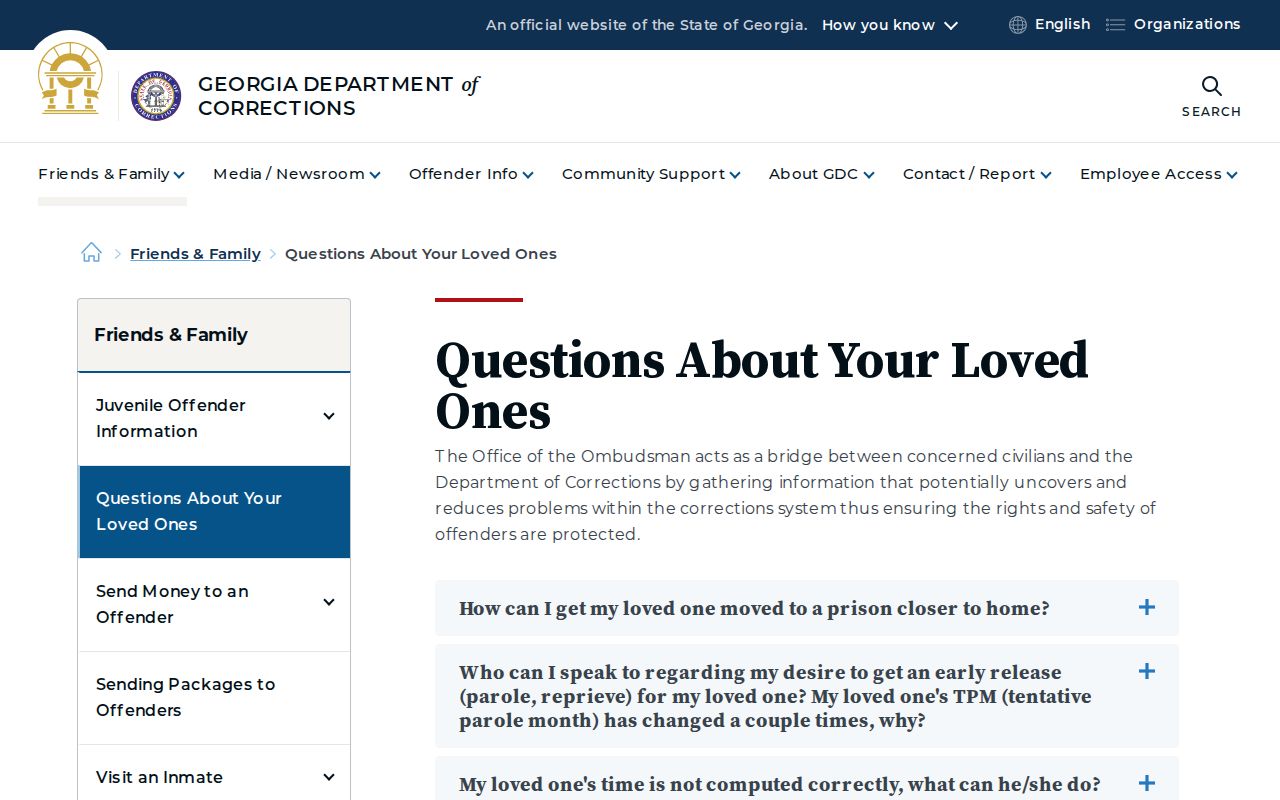
The captured state source confirms why a sentenced Lumpkin County person belongs in the GDC search rather than a county recent-release view. If a field conflicts with a later order or notice, request clarification from the originating state office.
After parole release, check the Parole Board database and the DCS Dahlonega office serving Lumpkin County. A person can be outside prison while still under state supervision. When that supervision ends, a discharge record is stronger proof than an old facility entry. Preserve the result date because fields can change as a sentence moves through review, release, supervision, and final discharge.